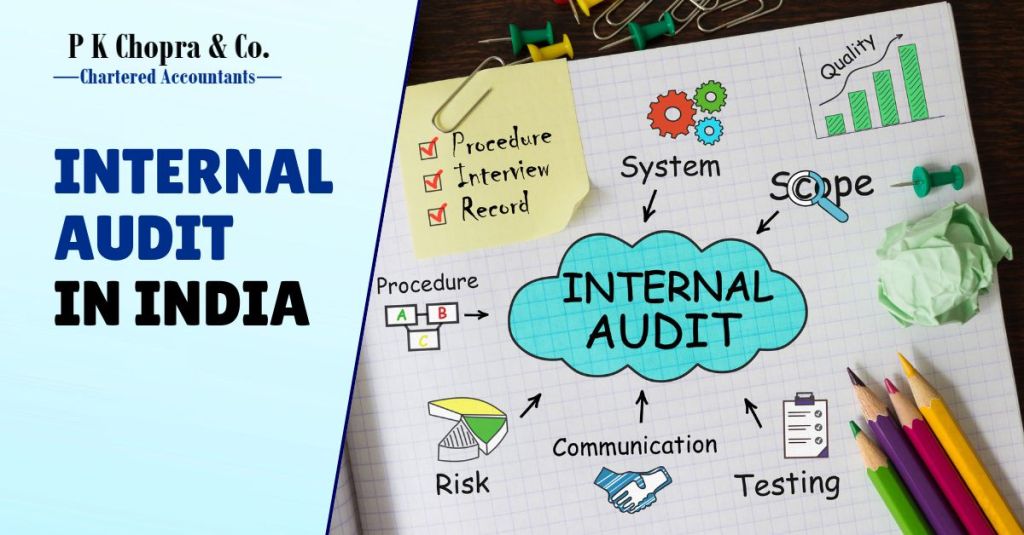
In the rapidly evolving business landscape of India, maintaining transparency, accountability, and operational efficiency has become more critical than ever. As companies scale and regulatory expectations increase, internal audits have emerged as a vital pillar of good corporate governance.
A well-executed internal audit ensures that every process within an organization — from finance and operations to compliance and risk management — functions effectively and in alignment with business objectives. The practice not only safeguards against fraud and inefficiencies but also helps companies make informed, data-driven decisions.
Modern organizations increasingly rely on professionals specializing in Internal audit in India to assess their internal controls, identify gaps, and recommend improvements that strengthen their governance framework.
This comprehensive guide explores the role, importance, scope, and evolving dynamics of internal audits within India’s corporate ecosystem.
1. Understanding Internal Audit
An internal audit is an independent, objective assurance and consulting activity designed to add value and improve an organization’s operations.
Unlike statutory or external audits that focus primarily on financial reporting, internal audits evaluate internal controls, risk management systems, and operational effectiveness.
Objectives of Internal Audit
- Ensure accuracy of financial and operational information.
- Verify compliance with internal policies and legal regulations.
- Detect and prevent fraud or inefficiency.
- Evaluate the effectiveness of risk management systems.
- Recommend process improvements and cost savings.
2. The Need for Internal Auditing in India
India’s corporate landscape has grown exponentially, but with growth comes complexity. Internal audits have become essential for several reasons:
a. Regulatory Compliance
Companies must comply with laws such as:
- Companies Act, 2013
- SEBI Listing Obligations
- Income Tax and GST Acts
Internal audits ensure that compliance gaps are identified and corrected before they escalate.
b. Fraud Detection and Prevention
According to global fraud studies, businesses lose an average of 5% of annual revenue to fraud. Internal audits help uncover irregularities before they become systemic issues.
c. Risk Management
By evaluating risk control frameworks, internal audits help organizations anticipate potential threats and mitigate them proactively.
d. Performance Improvement
Internal auditors analyze efficiency in business processes, ensuring resources are optimally used and strategic objectives are met.
3. Legal Framework Governing Internal Audits in India
The Companies Act, 2013 made internal audits mandatory for certain categories of companies.
Applicability (Section 138 of Companies Act, 2013):
Internal audits are mandatory for:
- Listed companies.
- Unlisted public companies with:
- Turnover ≥ ₹200 crore, or
- Outstanding loans or borrowings ≥ ₹100 crore.
- Private companies with:
- Turnover ≥ ₹200 crore, or
- Outstanding loans ≥ ₹100 crore from banks or financial institutions.
This mandate ensures that all medium and large organizations maintain strong internal control systems.
4. Types of Internal Audits
Depending on business needs, internal audits can take multiple forms:
| Type of Audit | Purpose |
|---|---|
| Financial Audit | Verifies accuracy of accounting records and transactions. |
| Operational Audit | Assesses efficiency of business operations and processes. |
| Compliance Audit | Ensures adherence to internal policies and external regulations. |
| IT Audit | Evaluates cybersecurity, data integrity, and system security. |
| Environmental & Sustainability Audit | Examines sustainability practices and regulatory compliance. |
| Forensic Audit | Investigates fraud, embezzlement, or financial misconduct. |
Modern companies often use a hybrid audit approach combining multiple types to gain a holistic understanding of organizational health.
5. The Internal Audit Process
Internal auditing follows a systematic, risk-based approach designed to evaluate and improve control effectiveness.
Step 1: Planning
Auditors identify objectives, scope, and potential risk areas.
Step 2: Risk Assessment
Each process is evaluated for inherent and residual risks.
Step 3: Fieldwork and Data Collection
Interviews, document reviews, and sample testing are conducted to collect evidence.
Step 4: Evaluation
The audit team compares findings against benchmarks and company policies.
Step 5: Reporting
A detailed audit report highlights strengths, weaknesses, and corrective recommendations.
Step 6: Follow-Up
Auditors verify that management has implemented corrective actions and process improvements.
6. Benefits of Internal Audit in Indian Businesses
| Benefit | Description |
|---|---|
| Improved Governance | Ensures adherence to corporate ethics and policies. |
| Operational Efficiency | Streamlines workflows and reduces redundancies. |
| Fraud Prevention | Detects irregularities and enforces accountability. |
| Strategic Insight | Provides management with actionable insights for growth. |
| Regulatory Confidence | Demonstrates compliance to investors, regulators, and stakeholders. |
Companies that regularly conduct internal audits report better profitability, transparency, and stakeholder trust.
7. Role of Internal Auditors
Internal auditors serve as trusted advisors to management. Their role extends beyond traditional verification to strategic advisory functions.
Key Responsibilities:
- Identify process inefficiencies and cost overruns.
- Evaluate risk exposure across departments.
- Assess the reliability of management information systems.
- Recommend internal control improvements.
- Facilitate risk-based decision-making.
Auditors act as the bridge between operational teams and management, ensuring alignment between daily activities and corporate goals.
8. Internal Audit vs External Audit
While both serve essential purposes, their scope and objectives differ:
| Aspect | Internal Audit | External Audit |
|---|---|---|
| Objective | Improve internal controls and efficiency | Provide opinion on financial statements |
| Appointed By | Management | Shareholders |
| Frequency | Continuous or periodic | Annual |
| Scope | Operational and strategic | Financial reporting |
| Regulations | Section 138, Companies Act, 2013 | Section 139, Companies Act, 2013 |
Internal audits focus on performance improvement, whereas external audits ensure financial compliance. Both complement each other in maintaining business integrity.
9. Challenges Faced in Internal Auditing
Despite its benefits, internal auditing faces challenges such as:
- Resistance from departments during audits.
- Limited access to real-time data or records.
- Resource constraints for smaller firms.
- Integration with new technologies and ERP systems.
- Maintaining independence while being part of the organization.
These challenges can be mitigated through automation, effective communication, and professional expertise.
10. The Growing Role of Technology in Internal Audits
Digital transformation has revolutionized internal auditing. Companies now use advanced tools such as:
- Data Analytics Software (Power BI, ACL, Tableau).
- AI-Based Risk Management Systems.
- Continuous Auditing Tools that monitor transactions in real time.
- Cloud-Based Audit Management Platforms.
Technology enables auditors to detect anomalies, analyze large datasets, and provide actionable insights faster and more accurately.
11. Internal Audit in Startups and SMEs
While internal audits were once considered relevant only for large corporations, even startups and SMEs now recognize their importance.
Benefits for Small Businesses:
- Identify financial leakages early.
- Optimize limited resources.
- Build investor confidence.
- Improve regulatory compliance (especially GST and ROC filings).
A proactive audit function helps startups scale sustainably while maintaining transparency.
12. Internal Audit in the Public Sector
Public sector organizations in India are also strengthening internal audits to improve accountability and governance.
Government initiatives like:
- Comptroller and Auditor General (CAG) Framework
- Public Financial Management System (PFMS)
ensure that taxpayer funds are used efficiently and ethically.
Internal auditing in public enterprises enhances transparency, fiscal discipline, and public trust.
13. Role of Internal Audit in Risk Management
Internal audits play a crucial role in Enterprise Risk Management (ERM) by:
- Identifying key operational and strategic risks.
- Evaluating the effectiveness of mitigation controls.
- Advising management on emerging risks like cybersecurity or data breaches.
Auditors not only detect weaknesses but also help design risk mitigation strategies aligned with business goals.
14. Internal Audit Reporting and Follow-Up
An effective audit report should be:
- Clear – avoiding technical jargon.
- Objective – presenting facts, not opinions.
- Actionable – offering practical recommendations.
Follow-up audits verify that management has implemented corrective actions and achieved desired results.
15. Importance of Independence and Objectivity
Internal auditors must remain independent of the operations they audit. Independence ensures unbiased judgment, while objectivity ensures fair evaluation.
To maintain independence:
- Auditors report directly to the Audit Committee or Board of Directors.
- Conflicts of interest must be disclosed.
- Regular rotation of audit personnel is encouraged.
16. Emerging Trends in Internal Auditing in India
The future of internal auditing in India is evolving with these trends:
- Integrated Audits: Combining operational, compliance, and IT audits.
- Continuous Auditing: Real-time monitoring using automation.
- ESG Auditing: Assessing sustainability and environmental impact.
- Cybersecurity Audits: Growing focus on data protection and privacy.
- Remote Auditing: Enabled by digital collaboration tools.
These innovations enhance the agility and impact of internal audit functions.
17. Role of Internal Audit in Building Investor Confidence
Investors, especially foreign and institutional ones, prefer companies with strong internal audit frameworks.
A transparent and efficient internal audit:
- Improves confidence in financial reporting.
- Reduces perceived risk.
- Enhances company valuation during fundraising or IPOs.
Hence, internal audit acts as a strategic asset, not just a compliance requirement.
18. Key Takeaways
- Internal audits ensure control, compliance, and efficiency.
- Mandatory under the Companies Act for large enterprises.
- Essential for fraud prevention and risk management.
- Technology and data analytics are transforming the audit landscape.
- A strong audit function enhances corporate governance and investor trust.
Conclusion
In India’s evolving corporate ecosystem, internal audits have become indispensable for sustainable growth and regulatory compliance. They go beyond detecting errors — they drive performance improvement, strengthen controls, and inspire confidence among stakeholders.
Organizations that invest in robust internal auditing systems are better equipped to face uncertainty, scale efficiently, and maintain stakeholder trust. Partnering with experts who specialize in Internal audit in India ensures your business is compliant, transparent, and strategically positioned for long-term success.
Frequently Asked Questions (FAQs)
1. Is internal audit mandatory for all companies in India?
No. It’s mandatory for listed companies and certain unlisted entities as per Section 138 of the Companies Act, 2013.
2. How often should internal audits be conducted?
Typically quarterly or annually, depending on company size and risk profile.
3. Can internal auditors be company employees?
Yes, but independence should be maintained; external firms are often preferred.
4. What’s the difference between internal and statutory audits?
Internal audits focus on process efficiency; statutory audits ensure financial compliance.
5. Which industries benefit most from internal audits?
Banking, manufacturing, IT, real estate, and e-commerce sectors benefit significantly.
6. Can startups conduct internal audits?
Absolutely. Even small firms benefit from early control systems and process audits.
7. What are the modern tools used in internal audits?
Data analytics, ERP integration, and cloud-based audit management tools.
 Auditing Services in India