Be yourself; Everyone else is already taken.
— Oscar Wilde.
This is the first post on my new blog. I’m just getting this new blog going, so stay tuned for more. Subscribe below to get notified when I post new updates.
Be yourself; Everyone else is already taken.
— Oscar Wilde.
This is the first post on my new blog. I’m just getting this new blog going, so stay tuned for more. Subscribe below to get notified when I post new updates.

Income tax audit is a mandatory compliance for certain businesses and professionals under the Income Tax Act. It ensures that financial records are accurate, tax calculations are correct, and statutory provisions are properly followed. A tax audit helps reduce errors, improves transparency, and prevents penalties from the Income Tax Department. If you are planning Income Tax Audit in Delhi, understanding applicability, documentation, process, and deadlines is essential for smooth compliance.
A tax audit is the examination of books of accounts by a Chartered Accountant to verify income, deductions, and tax compliance as per Section 44AB of the Income Tax Act. It ensures that financial statements correctly reflect business activities and taxable income.
Objectives of tax audit:
It improves credibility and reduces the risk of scrutiny.
Tax audit is mandatory when turnover or receipts exceed prescribed limits.
Applicability criteria:
The audit must be conducted by a practicing Chartered Accountant.
Tax audit has a specific statutory deadline linked to income tax return filing.
Key due date:
Late filing may attract penalties and interest.
The audit report must be filed in prescribed forms on the income tax portal.
Applicable forms:
These forms are uploaded by the Chartered Accountant and approved by the taxpayer.
Proper documentation is necessary for accurate audit reporting.
Key documents:
These records help the auditor verify financial accuracy.
A structured audit process ensures compliance and timely filing.
Audit process:
After acceptance, the income tax return can be filed.
Failure to conduct a tax audit attracts penalties under the Income Tax Act.
Penalty provisions:
Penalty may be waived if reasonable cause is provided.
Apart from statutory compliance, tax audit provides operational benefits.
Key advantages:
It strengthens financial discipline.
Many taxpayers face issues due to poor record maintenance.
Frequent mistakes:
Proper preparation avoids last-minute complications.
Companies and partnership firms in Delhi must comply with tax audit provisions if they meet turnover criteria.
Key compliance areas:
Professional handling ensures accurate reporting.
Following best practices helps complete the audit on time.
Recommended approach:
This reduces errors and penalties.
Income tax audit is a critical compliance requirement for businesses and professionals exceeding prescribed turnover limits. It ensures accurate reporting of income, proper claim of deductions, and adherence to tax laws. By maintaining proper records, reconciling financial data, and filing the audit report before the due date, taxpayers can avoid penalties and scrutiny. A well-managed Income Tax Audit in Delhi strengthens financial transparency and supports long-term business compliance.
Q1 Who is required to get a tax audit done?
Businesses with turnover above ₹1 crore and professionals with receipts above ₹50 lakh must undergo tax audit.
Q2 What is the due date for tax audit filing?
The tax audit report must be filed before the income tax return due date, generally 30 September.
Q3 Which forms are used for tax audit?
Form 3CA or 3CB along with Form 3CD are used for filing the audit report.
Q4 Who can conduct a tax audit?
Only a practicing Chartered Accountant can conduct and certify the tax audit.
Q5 What is the penalty for not conducting a tax audit?
The penalty is 0.5 percent of turnover subject to a maximum of ₹1,50,000.
Q6 Is tax audit required if there is a loss?
It may still be required depending on turnover and presumptive taxation provisions.

In today’s complex and rapidly evolving business environment, structured verification processes are essential before making major financial or strategic commitments. Businesses, investors, and institutions increasingly rely on Due Diligence Services in India to assess financial integrity, legal compliance, operational stability, and tax exposure before entering into mergers, acquisitions, investments, or partnerships. A systematic evaluation not only protects capital but also strengthens negotiation power and long-term sustainability.
India’s expanding economy, regulatory diversity, and vibrant startup ecosystem make professional risk assessment a critical business function rather than an optional safeguard.
Corporate risk assessment is a structured investigation conducted before entering into a transaction or investment. It provides a detailed review of a target entity’s financial records, legal standing, compliance history, and operational efficiency.
The main goals include:
A well-executed review provides clarity and minimizes unpleasant surprises after transaction completion.
India presents unique regulatory and operational challenges that demand careful scrutiny.
Businesses in India must comply with:
Failure to verify compliance may result in penalties or litigation.
India continues to attract:
Investors require comprehensive insights before committing capital.
Different transactions require different types of structured analysis.
Financial evaluation focuses on:
It helps determine whether financial statements reflect economic reality.
Legal review includes:
Legal due diligence protects buyers from inheriting disputes.
Tax compliance verification involves:
Tax exposure can significantly affect transaction value.
Operational evaluation analyzes:
Strong operations indicate long-term sustainability.
A systematic approach ensures consistency and completeness.
Clarity at this stage prevents scope creep and delays.
Documents typically reviewed include:
Secure digital platforms are often used for document sharing.
Professionals analyze information to detect:
Risks are categorized based on severity.
The final report usually contains:
This report supports negotiation and decision-making.
Understanding India’s legal environment is essential for effective assessment.
This legislation governs:
Verification ensures the entity adheres to legal obligations.
Listed companies must comply with regulatory bodies overseeing disclosures and corporate governance standards.
Compliance with direct and indirect taxation laws significantly affects financial exposure and transaction viability.
Financial distress situations require careful evaluation under insolvency regulations to understand creditor rights and liabilities.
Structured investigations often uncover recurring risk patterns.
Identifying these risks early can significantly alter deal terms.
Risk evaluation plays a decisive role in M&A transactions.
A comprehensive review ensures:
Findings may lead to:
Contracts can be structured to allocate identified risks appropriately between buyer and seller.
India’s startup ecosystem is dynamic but often lacks structured governance.
Early identification of governance gaps helps investors mitigate risk.
International investors often face unfamiliar regulatory frameworks.
Structured evaluation offers:
It reduces uncertainty in cross-border transactions.
Digital transformation has enhanced investigative processes.
Advanced tools assist in:
These platforms provide:
Technology improves speed and accuracy.
Organizations should consider the following practices:
Consistency and objectivity ensure reliable outcomes.
Beyond transaction safety, structured review offers strategic benefits:
Businesses that adopt rigorous evaluation practices often build stronger reputations in the marketplace.
Thorough financial, legal, tax, and operational evaluation is indispensable for informed decision-making in India’s dynamic business landscape. Organizations that engage Due Diligence Services in India gain clarity, reduce uncertainty, and protect stakeholder interests before entering into significant transactions. By identifying hidden liabilities, compliance gaps, and operational inefficiencies in advance, businesses can negotiate better terms, structure stronger contracts, and build sustainable growth strategies.
Structured assessment is not merely a regulatory formality—it is a strategic safeguard that strengthens long-term success.
Q1. What is the main purpose of conducting a corporate evaluation before acquisition?
The primary purpose is to identify financial, legal, tax, and operational risks before completing a transaction. This helps investors make informed decisions and avoid unexpected liabilities.
Q2. How long does a typical corporate review process take in India?
The duration depends on the transaction’s size and complexity. Smaller reviews may take a few weeks, while large or cross-border transactions may take several months.
Q3. Is financial analysis alone sufficient before investing?
No. Financial analysis must be combined with legal, tax, and operational reviews to provide a comprehensive risk assessment.
Q4. What are the most common red flags discovered during evaluations?
Common red flags include undisclosed liabilities, pending litigation, tax non-compliance, inflated revenue reporting, and weak internal controls.
Q5. Do startups require structured evaluation before funding?
Yes. Startups often lack formal governance structures, making verification of shareholding, intellectual property, and compliance essential for investors.
Q6. Can risk assessment eliminate all transaction risks?
No evaluation can remove all risks. However, it significantly reduces uncertainty and helps structure contracts to manage identified risks effectively.

For businesses operating in India, understanding the requirements of an Income Tax Audit in India is essential for maintaining financial transparency and regulatory compliance. Tax audits are not merely procedural formalities; they are structured examinations designed to verify the accuracy of financial records, ensure proper reporting of income, and confirm adherence to tax laws. Companies, professionals, and certain individuals crossing prescribed turnover limits must comply with audit provisions under the Income Tax Act.
This comprehensive guide explains the concept, applicability, procedures, documentation, penalties, and practical considerations related to tax audits in India.
A tax audit refers to the examination of financial records by a qualified Chartered Accountant to ensure compliance with tax laws. The objective is to verify:
It is governed by Section 44AB of the Income Tax Act.
Not every taxpayer is required to undergo a tax audit. The requirement depends on turnover, receipts, and type of business activity.
A tax audit becomes mandatory if annual turnover exceeds the prescribed threshold under the Income Tax Act.
Professionals such as doctors, lawyers, architects, and consultants must undergo audit if gross receipts exceed the specified limit.
If a taxpayer opts out of presumptive taxation and declares income below the prescribed percentage, audit requirements may apply.
Understanding applicability is critical to avoid penalties.
The purpose of a tax audit extends beyond compliance.
A properly conducted audit enhances credibility.
Tax audits are governed primarily by:
These forms capture detailed financial and compliance information.
Only a practicing Chartered Accountant can conduct and certify a tax audit.
Professional independence ensures objectivity.
Businesses subject to audit must maintain proper records.
Accurate documentation simplifies audit procedures.
Tax audit reports are filed electronically.
Used when the business is already subject to statutory audit under other laws.
Used when no other statutory audit is applicable.
Contains detailed financial and tax-related disclosures.
The audit report must be filed before the prescribed due date.
The due date typically aligns with the income tax return filing deadline for audited cases.
Late filing may result in penalties and compliance issues.
Timely preparation avoids last-minute complications.
Failure to conduct a mandatory audit may result in penalties.
A percentage of turnover or a specified monetary limit, whichever is lower.
However, penalties may be waived if reasonable cause is established.
Accurate turnover calculation is essential for determining audit applicability.
Misclassification may trigger unnecessary compliance or penalties.
Understanding the audit process improves preparation.
The taxpayer appoints a qualified Chartered Accountant.
All financial documents are provided for examination.
The auditor verifies income, expenses, compliance, and statutory deductions.
Audit findings are documented and filed electronically.
Auditors typically review:
Discrepancies must be explained or corrected.
Although mandatory in certain cases, tax audits offer advantages.
Proper audit preparation strengthens governance.
Businesses registered under GST must reconcile turnover reported under GST with income tax records.
Differences may raise queries from tax authorities.
Maintaining consistency prevents future notices.
Tax audit reports are filed electronically on the income tax portal.
Digital filing ensures transparency and record tracking.
Businesses often encounter challenges such as:
Proactive planning minimizes difficulties.
Preparation reduces audit stress.
A tax audit should not be confused with tax assessment.
Audit does not automatically imply scrutiny.
Many small businesses are unaware of audit thresholds.
Lack of awareness may lead to delayed compliance and penalties.
Periodic review of turnover ensures preparedness.
Financial institutions often prefer audited financial statements.
Audit certification improves credibility and access to funding.
Taxpayers must preserve financial records for prescribed periods.
Retention ensures readiness for future scrutiny or assessments.
Businesses should adopt:
Consistency builds trust with authorities.
Complying with the requirements of an Income Tax Audit in India is essential for businesses and professionals crossing statutory thresholds. Beyond legal obligation, a structured audit process enhances financial accuracy, transparency, and credibility. Proper documentation, timely filing, and professional guidance ensure smooth compliance while reducing the risk of penalties or regulatory scrutiny. Businesses that treat tax audit as a governance tool rather than a burden are better positioned for sustainable growth.
Q1. Who is required to undergo a tax audit in India?
Businesses and professionals crossing prescribed turnover or receipt limits under the Income Tax Act are required to undergo a tax audit.
Q2. What is the penalty for not conducting a mandatory audit?
A penalty may be imposed based on turnover or a specified maximum limit, subject to reasonable cause provisions.
Q3. Can a company appoint any accountant for tax audit?
No, only a practicing Chartered Accountant is authorized to conduct and certify a tax audit.
Q4. Is tax audit different from statutory audit?
Yes, a statutory audit is required under company law, whereas a tax audit is mandated under income tax law.
Q5. Are digital signatures mandatory for filing audit reports?
Yes, tax audit reports must be filed electronically with digital authentication.
Q6. Does tax audit automatically mean tax scrutiny?
No, undergoing a tax audit does not automatically trigger scrutiny or assessment by tax authorities.

Tax compliance is a fundamental responsibility for businesses operating in India, particularly in major commercial hubs like Delhi. As regulatory scrutiny increases and financial reporting becomes more structured, many businesses seek clarity around statutory requirements such as Income Tax Audit in Delhi. Understanding how audits work, who they apply to, and why they matter is essential for maintaining legal compliance and financial discipline.
For businesses of all sizes, tax audits are not merely a legal formality. They play a critical role in ensuring transparency, accuracy, and consistency in financial reporting.
A tax audit is a systematic examination of a taxpayer’s financial records to verify compliance with income tax laws. The primary objectives include:
Tax audits help tax authorities maintain fairness and reduce the risk of revenue leakage.
Tax audits are conducted by qualified professionals who review books of accounts, financial statements, and supporting documentation. Their role is to certify that records are maintained correctly and in accordance with the law.
Certain businesses and professionals are required to undergo audits based on turnover or gross receipts thresholds defined under tax regulations.
Some categories of businesses face additional scrutiny due to the complexity of their operations, volume of transactions, or specific tax provisions applicable to them.
Proper bookkeeping is the foundation of audit readiness. This includes maintaining:
Accurate records reduce audit complications and delays.
Using consistent accounting methods year after year helps auditors assess financial performance more efficiently and reduces the risk of discrepancies.
Audits bring clarity to financial statements, making it easier for stakeholders to understand a business’s financial position.
Proper audits help identify errors early, reducing the likelihood of penalties, interest, or disputes with tax authorities.
Tax audits ensure businesses comply with statutory provisions related to income reporting, expense claims, and deductions.
Audit completion is often a prerequisite for filing certain tax returns, making it a critical part of the compliance timeline.
Missing invoices or unsupported expense claims are common issues that complicate audits.
Differences between books of accounts and bank statements or tax filings can raise questions during audits.
Conducting internal checks throughout the year helps identify and correct issues before formal audits.
Keeping financial documents well-organized saves time and reduces stress during the audit process.
Audit requirements encourage businesses to adopt better financial controls and monitoring practices.
Clear financial data helps management make informed decisions about investments, expansion, and cost control.
Audited financial statements enhance credibility with lenders, investors, and partners.
Banks and financial institutions often prefer dealing with businesses that maintain audited accounts.
Tax laws can be complex and subject to change. Professional support helps businesses interpret and apply regulations correctly.
Expert guidance allows business owners to focus on operations while ensuring compliance obligations are met accurately.
Missing audit deadlines can result in penalties and additional compliance issues.
Early preparation ensures that audits are completed smoothly within prescribed timelines.
Small and medium enterprises may also be subject to audit requirements depending on turnover and business nature.
A properly conducted audit is a preventive measure and does not necessarily imply wrongdoing.
Audit findings often highlight inefficiencies or gaps in internal controls.
Addressing audit observations can improve long-term financial stability and compliance.
Consistent compliance lowers the risk of disputes and future scrutiny.
Strong financial governance supports scalability and long-term success.
For businesses operating in a competitive and regulated environment like Delhi, tax compliance is both a legal necessity and a strategic advantage. Understanding the scope and significance of Income Tax Audit in Delhi helps businesses maintain transparency, reduce risk, and build long-term credibility. With proper preparation, disciplined record-keeping, and informed guidance, tax audits can become a constructive tool rather than a compliance burden.
To verify that financial records accurately reflect income and expenses in compliance with tax laws.
Yes, depending on turnover thresholds and the nature of business activities.
Delays can lead to penalties and additional scrutiny from tax authorities.
Audits improve accuracy but do not eliminate the possibility of further assessment or queries.
Regular reviews throughout the year help ensure audit readiness and compliance.
Yes, audit observations often highlight areas for better financial control and efficiency.

Tax compliance is one of the most critical responsibilities for businesses and professionals operating in India. As financial transactions grow in volume and complexity, ensuring accuracy in income reporting becomes essential to avoid penalties and scrutiny. This is why many businesses rely on professional support for income Tax Audit in Delhi to meet statutory requirements, maintain transparency, and safeguard their financial credibility.
Delhi, being a major commercial hub, offers access to experienced tax professionals who understand audit regulations, reporting standards, and compliance obligations. With assistance from a trusted chartered accountant firm, taxpayers can navigate the audit process efficiently while ensuring full compliance with income tax laws.
An income tax audit is a systematic examination of a taxpayer’s financial records to verify compliance with income tax laws.
Audits ensure that income, expenses, and deductions are reported correctly.
Certain taxpayers are legally required to undergo tax audits under specific conditions.
Accurate audits help avoid fines, interest, and legal consequences.
Audits promote credibility with tax authorities and stakeholders.
The audit process improves accounting practices and record-keeping.
Not every taxpayer requires an audit, but certain thresholds and conditions apply.
Businesses crossing specified turnover thresholds must get audited.
Professionals earning beyond defined limits are subject to audit.
Special rules apply to taxpayers opting out of presumptive taxation.
Certain deductions require audited financial statements.
Specific notices may mandate a tax audit.
Understanding applicability helps avoid non-compliance.
Many businesses struggle with tax audits due to multiple factors.
Poor bookkeeping complicates audit verification.
Errors increase the risk of adjustments and penalties.
Keeping up with amendments can be difficult.
Missing invoices or vouchers delay audits.
Audit deadlines often coincide with peak business periods.
Professional audit support makes compliance smoother and stress-free.
Auditors follow a systematic approach to review financial records.
Ensures all disclosures comply with statutory formats.
Issues are detected and corrected before submission.
Professional handling ensures audits are completed before deadlines.
Expert review minimizes the chance of penalties or notices.
| Audit Area | Purpose |
|---|---|
| Books of Accounts | Accuracy and completeness |
| Income Reporting | Correct disclosure |
| Expense Verification | Validity of claims |
| Depreciation | Proper calculation |
| Tax Computation | Accurate liability |
| Statutory Disclosures | Legal compliance |
Each area ensures full financial transparency.
Experienced auditors play a vital role in successful tax audits.
Auditors stay updated with income tax regulations.
They ensure all supporting documents are in order.
Clients receive clarity on audit findings and corrections.
Auditors assist in responding to queries, if required.
Audit insights help improve future tax planning.
Working with a reliable chartered accountant firm in India ensures audits are handled with precision and integrity.
Avoiding these mistakes can save time and money.
Professional assistance helps eliminate these issues.
Delhi offers several advantages for tax audit services.
These factors make Delhi ideal for audit support.
| Aspect | Professional Tax Audit | Self-Assessment |
|---|---|---|
| Accuracy | High | Risk of errors |
| Compliance Risk | Low | Higher |
| Documentation | Structured | Often incomplete |
| Credibility | Strong | Limited |
| Long-Term Benefit | High | Minimal |
Professional audits provide greater assurance.
Income tax audits are common across industries such as:
Each industry benefits from structured audit processes.
Audits contribute to long-term stability.
Opting for professional income Tax Audit in Delhi ensures accurate compliance, financial transparency, and peace of mind. With expert handling, businesses can meet statutory obligations efficiently while minimizing risks and improving financial practices.
With support from experienced tax professionals, taxpayers can confidently manage audits, maintain credibility, and focus on business growth without compliance concerns.
1. What is an income tax audit?
It is an examination of financial records to verify tax compliance.
2. Who is required to undergo a tax audit?
Businesses and professionals crossing prescribed limits or conditions.
3. Is tax audit mandatory every year?
Only if statutory conditions are met.
4. Can penalties be avoided through audits?
Yes, accurate audits reduce penalty risk.
5. How long does a tax audit take?
It depends on record quality and business size.
6. Is professional help necessary for tax audits?
Yes, it ensures accuracy, compliance, and timely completion.
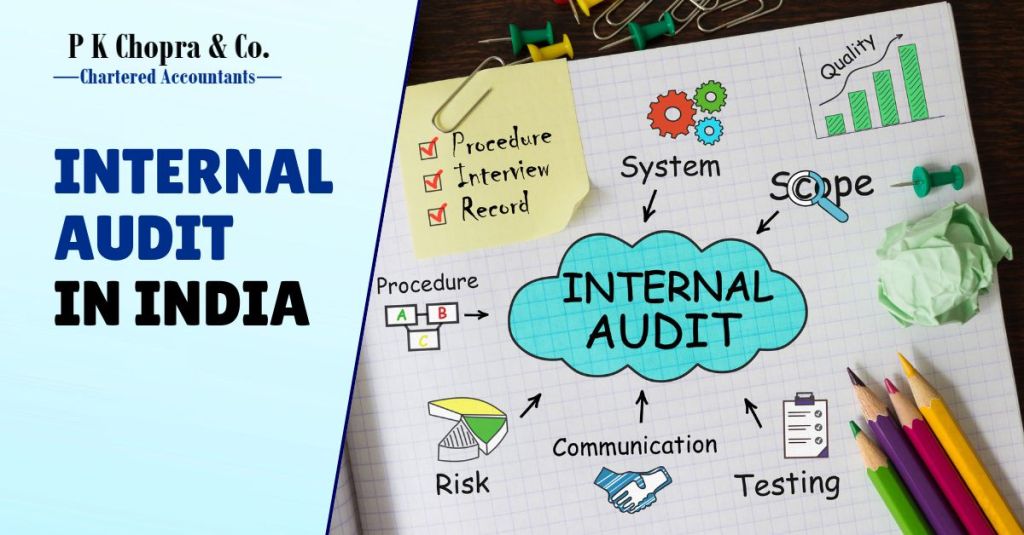
In the rapidly evolving business landscape of India, maintaining transparency, accountability, and operational efficiency has become more critical than ever. As companies scale and regulatory expectations increase, internal audits have emerged as a vital pillar of good corporate governance.
A well-executed internal audit ensures that every process within an organization — from finance and operations to compliance and risk management — functions effectively and in alignment with business objectives. The practice not only safeguards against fraud and inefficiencies but also helps companies make informed, data-driven decisions.
Modern organizations increasingly rely on professionals specializing in Internal audit in India to assess their internal controls, identify gaps, and recommend improvements that strengthen their governance framework.
This comprehensive guide explores the role, importance, scope, and evolving dynamics of internal audits within India’s corporate ecosystem.
An internal audit is an independent, objective assurance and consulting activity designed to add value and improve an organization’s operations.
Unlike statutory or external audits that focus primarily on financial reporting, internal audits evaluate internal controls, risk management systems, and operational effectiveness.
India’s corporate landscape has grown exponentially, but with growth comes complexity. Internal audits have become essential for several reasons:
Companies must comply with laws such as:
According to global fraud studies, businesses lose an average of 5% of annual revenue to fraud. Internal audits help uncover irregularities before they become systemic issues.
By evaluating risk control frameworks, internal audits help organizations anticipate potential threats and mitigate them proactively.
Internal auditors analyze efficiency in business processes, ensuring resources are optimally used and strategic objectives are met.
The Companies Act, 2013 made internal audits mandatory for certain categories of companies.
Internal audits are mandatory for:
This mandate ensures that all medium and large organizations maintain strong internal control systems.
Depending on business needs, internal audits can take multiple forms:
| Type of Audit | Purpose |
|---|---|
| Financial Audit | Verifies accuracy of accounting records and transactions. |
| Operational Audit | Assesses efficiency of business operations and processes. |
| Compliance Audit | Ensures adherence to internal policies and external regulations. |
| IT Audit | Evaluates cybersecurity, data integrity, and system security. |
| Environmental & Sustainability Audit | Examines sustainability practices and regulatory compliance. |
| Forensic Audit | Investigates fraud, embezzlement, or financial misconduct. |
Modern companies often use a hybrid audit approach combining multiple types to gain a holistic understanding of organizational health.
Internal auditing follows a systematic, risk-based approach designed to evaluate and improve control effectiveness.
Auditors identify objectives, scope, and potential risk areas.
Each process is evaluated for inherent and residual risks.
Interviews, document reviews, and sample testing are conducted to collect evidence.
The audit team compares findings against benchmarks and company policies.
A detailed audit report highlights strengths, weaknesses, and corrective recommendations.
Auditors verify that management has implemented corrective actions and process improvements.
| Benefit | Description |
|---|---|
| Improved Governance | Ensures adherence to corporate ethics and policies. |
| Operational Efficiency | Streamlines workflows and reduces redundancies. |
| Fraud Prevention | Detects irregularities and enforces accountability. |
| Strategic Insight | Provides management with actionable insights for growth. |
| Regulatory Confidence | Demonstrates compliance to investors, regulators, and stakeholders. |
Companies that regularly conduct internal audits report better profitability, transparency, and stakeholder trust.
Internal auditors serve as trusted advisors to management. Their role extends beyond traditional verification to strategic advisory functions.
Auditors act as the bridge between operational teams and management, ensuring alignment between daily activities and corporate goals.
While both serve essential purposes, their scope and objectives differ:
| Aspect | Internal Audit | External Audit |
|---|---|---|
| Objective | Improve internal controls and efficiency | Provide opinion on financial statements |
| Appointed By | Management | Shareholders |
| Frequency | Continuous or periodic | Annual |
| Scope | Operational and strategic | Financial reporting |
| Regulations | Section 138, Companies Act, 2013 | Section 139, Companies Act, 2013 |
Internal audits focus on performance improvement, whereas external audits ensure financial compliance. Both complement each other in maintaining business integrity.
Despite its benefits, internal auditing faces challenges such as:
These challenges can be mitigated through automation, effective communication, and professional expertise.
Digital transformation has revolutionized internal auditing. Companies now use advanced tools such as:
Technology enables auditors to detect anomalies, analyze large datasets, and provide actionable insights faster and more accurately.
While internal audits were once considered relevant only for large corporations, even startups and SMEs now recognize their importance.
A proactive audit function helps startups scale sustainably while maintaining transparency.
Public sector organizations in India are also strengthening internal audits to improve accountability and governance.
Government initiatives like:
Internal auditing in public enterprises enhances transparency, fiscal discipline, and public trust.
Internal audits play a crucial role in Enterprise Risk Management (ERM) by:
Auditors not only detect weaknesses but also help design risk mitigation strategies aligned with business goals.
An effective audit report should be:
Follow-up audits verify that management has implemented corrective actions and achieved desired results.
Internal auditors must remain independent of the operations they audit. Independence ensures unbiased judgment, while objectivity ensures fair evaluation.
To maintain independence:
The future of internal auditing in India is evolving with these trends:
These innovations enhance the agility and impact of internal audit functions.
Investors, especially foreign and institutional ones, prefer companies with strong internal audit frameworks.
A transparent and efficient internal audit:
Hence, internal audit acts as a strategic asset, not just a compliance requirement.
In India’s evolving corporate ecosystem, internal audits have become indispensable for sustainable growth and regulatory compliance. They go beyond detecting errors — they drive performance improvement, strengthen controls, and inspire confidence among stakeholders.
Organizations that invest in robust internal auditing systems are better equipped to face uncertainty, scale efficiently, and maintain stakeholder trust. Partnering with experts who specialize in Internal audit in India ensures your business is compliant, transparent, and strategically positioned for long-term success.
1. Is internal audit mandatory for all companies in India?
No. It’s mandatory for listed companies and certain unlisted entities as per Section 138 of the Companies Act, 2013.
2. How often should internal audits be conducted?
Typically quarterly or annually, depending on company size and risk profile.
3. Can internal auditors be company employees?
Yes, but independence should be maintained; external firms are often preferred.
4. What’s the difference between internal and statutory audits?
Internal audits focus on process efficiency; statutory audits ensure financial compliance.
5. Which industries benefit most from internal audits?
Banking, manufacturing, IT, real estate, and e-commerce sectors benefit significantly.
6. Can startups conduct internal audits?
Absolutely. Even small firms benefit from early control systems and process audits.
7. What are the modern tools used in internal audits?
Data analytics, ERP integration, and cloud-based audit management tools.

In the fast-paced economic landscape of 2026, Delhi has emerged as a central hub for startups, SMEs, and global corporations. However, with rapid growth comes the challenge of managing a sprawling inventory of physical and digital resources. An Assets audit in Delhi is no longer just a “best practice”—it is a strategic necessity for financial transparency and regulatory compliance. Whether you are dealing with heavy machinery in Okhla or high-end IT infrastructure in Cyber City, a systematic audit ensures your balance sheet reflects reality, not just projections.
An assets audit is a comprehensive verification process where an independent auditor examines a company’s records to confirm the existence, ownership, valuation, and condition of its assets. This involves reconciling the physical count of items against the Fixed Asset Register (FAR) and ensuring that depreciation is calculated according to the latest Indian Accounting Standards (Ind AS).
A professional audit covers four primary categories:
Delhi’s regulatory environment is becoming increasingly stringent. As of 2026, the push for digital transparency means that discrepancies in asset reporting can lead to severe penalties.
The primary goal of an Assets audit in Delhi is to ensure that the balance sheet is accurate. Overstating asset values can mislead investors, while understating them can hurt your borrowing capacity. Auditors verify that the “book value” aligns with the “market value” or “utility value” of the asset.
Ghost assets are items that remain on your books but are physically missing, broken, or sold. In large Delhi-based enterprises, it is common to find 10% to 15% of recorded assets no longer exist. Removing these from your records prevents you from paying unnecessary property taxes and insurance premiums on non-existent items.
The Income Tax Act, 1961, and the Companies Act, 2013, mandate specific depreciation schedules and disclosure norms. Furthermore, with the ICAI’s new guidelines effective from April 2026 capping tax audits per partner, having a streamlined asset record ensures your statutory auditor can work efficiently and accurately.
Asset misappropriation is a common form of internal fraud. Regular physical verification creates a “deterrent effect” and helps identify gaps in security or procurement processes. It ensures that expensive equipment—like laptops or specialized machinery—is where it’s supposed to be.
Knowing exactly what you own allows you to optimize resource allocation. Should you repair an old machine or replace it? Is your IT hardware capable of supporting the latest AI-driven workflows? An audit provides the data needed for informed capital expenditure (CapEx) planning.
At leading firms like PK Chopra & Co., the audit follows a structured, technology-driven approach designed for the 2026 business environment.
| Feature | Internal Asset Audit | External Asset Audit |
| Performed By | In-house team / Operations | Independent CA Firm |
| Primary Goal | Operational Efficiency | Compliance & Transparency |
| Stakeholder Confidence | Moderate | High (Accepted by Banks/Investors) |
| Frequency | Ongoing / Quarterly | Annually (Statutory Requirement) |
| Objective | Process Improvement | Unbiased Verification |
Q1 Is an assets audit mandatory for small businesses in Delhi?
While physical verification is a management responsibility under the Companies Act for all companies, statutory audits often require asset verification for any entity with significant fixed assets to ensure the “True and Fair” view of accounts.
Q2 What are the penalties for incorrect asset reporting in 2026?
Incorrect reporting can lead to fines under the Companies Act, disallowance of depreciation claims by the Income Tax Department, and qualified opinions in audit reports, which can damage your credit rating.
Q3 How does technology like RFID help in an asset audit?
In 2026, many firms use RFID or QR codes to automate the counting process. This reduces human error, speeds up verification by up to 70%, and provides a digital audit trail that is easy to update.
Q4 What happens if an asset is found to be “impaired”?
If an asset’s market value or utility has dropped significantly (e.g., due to technological obsolescence), the auditor will recommend an “impairment loss” write-down in the Profit and Loss statement to reflect its current value.
Q5 Can an assets audit help in insurance claims?
Yes. Having a verified, audited list of assets with their current condition and value provides robust evidence during insurance assessments after fire, theft, or natural disasters.
An Assets audit in Delhi is an investment in the health and credibility of your business. In an era where financial transparency is the currency of trust, knowing exactly what you own—and what it’s worth—gives you a massive advantage in the marketplace. By identifying ghost assets, preventing fraud, and ensuring total compliance with 2026 regulations, you protect your bottom line and pave the way for sustainable growth.

Global businesses operating in India are required to follow strict transfer pricing regulations, especially when transactions are conducted with related entities. Therefore, the demand for Transfer pricing audit services in india has increased rapidly as companies attempt to avoid penalties and scrutiny from tax authorities. Because cross-border dealings are constantly monitored, it has become essential that all inter-company transactions are documented correctly, evaluated objectively, and defended with robust financial logic. Consequently, businesses that ignore transfer pricing audits are often exposed to heavy tax adjustments and prolonged litigation.
Transfer pricing refers to the pricing of goods, services, or intangible assets exchanged between associated enterprises. These transactions are expected to be carried out at arm’s length, meaning prices must reflect what independent parties would have agreed upon. Because multinational corporations frequently transact within group entities, these prices directly impact taxable income. Therefore, Indian tax authorities scrutinize such transactions closely. If the pricing is found to be distorted, profits can be shifted and taxes avoided, which is why audits are enforced. As a result, documentation requirements have been strengthened year after year.
Transfer pricing audits are mandated under the Income Tax Act when international or specified domestic transactions exceed defined thresholds. The intention is to ensure transparency and fair taxation. During audits, tax officers examine comparability studies, financial benchmarking, and transactional records. If errors or inconsistencies are found, income adjustments are imposed. Because the burden of proof lies on the taxpayer, professional audit support becomes unavoidable. Moreover, failure to comply can result in penalties reaching up to 200% of the tax sought to be evaded.
Companies having cross-border transactions with related parties are required to maintain detailed transfer pricing documentation. This includes subsidiaries of foreign corporations, Indian companies exporting to their parent companies, or service centers rendering IT or back-office support. Additionally, large domestic groups involved in inter-unit transactions also fall under this ambit. Because regulatory thresholds are revised frequently, businesses often misjudge applicability. As a result, professional evaluation is necessary to determine compliance exposure accurately.
A transfer pricing audit revolves around benchmarking analysis, functional analysis, economic justification, and documentation accuracy. Each transaction is examined to determine whether it complies with arm’s length standards. Financial statements are reviewed. Agreements are evaluated. Comparables are tested. If the study is weak, the audit fails. Therefore, companies must prepare contemporaneous documentation every financial year. This documentation becomes the backbone during scrutiny proceedings.
The audit process starts with the identification of international and specified domestic transactions. After that, benchmarking studies are conducted using accepted databases. Comparables are filtered based on industry, size, risk profile, and geographic presence. Then, pricing methods are selected such as TNMM, CUP, or RPM. Once results are derived, arm’s length margins are calculated. If deviations are found, justifications are prepared. All findings are then compiled into audit-ready documentation.
Non-compliance with transfer pricing provisions leads to severe consequences. Penalties are levied for failure to maintain documentation, failure to submit Form 3CEB, and misreporting of transactions. Moreover, once an adjustment is proposed, interest liabilities also accumulate. Litigation costs increase. Reputation is damaged. Investor confidence is reduced. Therefore, ignoring audit requirements is not an option for serious businesses.
Professional services ensure that documentation is accurate, defensible, and updated annually. Experts conduct robust economic analysis and select the most appropriate method. This significantly reduces exposure during scrutiny. Furthermore, when queries are raised by tax officers, responses are drafted strategically. Consequently, unnecessary adjustments are avoided, and litigation risk is minimized. Over time, companies experience smoother audits and improved compliance culture.
Lack of comparable companies, outdated benchmarking, and incorrect method selection are common problems. Additionally, many companies fail to update documentation annually. As regulations evolve, outdated studies are rejected instantly by authorities. Moreover, internal data inconsistencies often weaken audit defense. Because of these challenges, audits are prolonged and disputes escalate.
Transfer pricing directly influences where profits are taxed. If pricing is aggressive, profits may be shifted to low-tax jurisdictions. However, such strategies attract audits and penalties. Therefore, conservative pricing models are increasingly adopted. By following arm’s length principles strictly, companies protect long-term profitability and avoid costly disputes.
Transfer pricing compliance is no longer optional for businesses operating across borders. It has become a regulatory necessity that demands professional precision. By using expert-driven Transfer pricing audit services in india, businesses safeguard themselves from heavy penalties, prolonged litigation, and reputational damage. When audits are prepared properly, documentation becomes defensible, scrutiny becomes manageable, and business continuity is preserved. Therefore, timely investment in transfer pricing audits is not an expense, but a strategic shield.
Q1 What is the purpose of a transfer pricing audit in India?
A transfer pricing audit ensures that related-party transactions follow arm’s length pricing standards.
Q2 Is Form 3CEB mandatory for transfer pricing audits?
Yes, Form 3CEB must be filed annually by companies having international or specified domestic transactions.
Q3 What happens if transfer pricing documentation is not maintained?
Heavy penalties and income adjustments are imposed by tax authorities.
Q4 Who conducts transfer pricing audits in India?
Audits are conducted by income tax authorities with assistance from transfer pricing officers.
Q5 Can transfer pricing audits be avoided?
No, audits cannot be avoided when threshold limits are crossed.

In today’s globalised business environment, transactions between related entities have increased significantly. As a result, regulatory scrutiny has also intensified, especially in metropolitan business hubs like Delhi. A transfer pricing audit has become a critical compliance requirement for companies engaged in international or specified domestic transactions. Businesses operating in the capital region increasingly rely on professional support for Transfer Pricing Audit in Delhi to ensure arm’s length pricing, regulatory accuracy, and protection from heavy penalties. When conducted correctly, a transfer pricing audit safeguards businesses from disputes and ensures long-term tax compliance.
Transfer pricing audit is a statutory examination conducted to verify whether transactions between related parties are priced at arm’s length.
This means the price charged between associated enterprises must match the price that would have been charged between independent parties under similar circumstances. Because cross-border transactions directly affect taxable income, Indian tax authorities closely monitor such dealings. Therefore, businesses with international operations or group entities are required to justify pricing mechanisms through detailed documentation and audit reports. When documentation is accurate, compliance risks are significantly reduced.
Key objectives of a transfer pricing audit include:
Because transfer pricing regulations are complex, errors are commonly observed when audits are handled without expert guidance.
Delhi hosts a large number of multinational corporations, startups with foreign funding, and domestic groups with inter-unit transactions. Consequently, transfer pricing audits are frequently triggered in this region.
Transfer pricing audit becomes applicable when:
Once applicability is established, documentation and audit reporting become mandatory. Non-compliance is not taken lightly by tax authorities.
Transfer pricing regulations in India are governed by the Income Tax Act, 1961, along with detailed rules and OECD-aligned guidelines. Over the years, amendments have strengthened enforcement mechanisms.
Important legal provisions include:
Because these provisions are technical, interpretations vary, which often leads to disputes during assessments. Therefore, precision in compliance becomes essential.
The audit process involves systematic evaluation and documentation of transactions. Each step must be completed accurately to avoid adjustments and penalties.
The process generally includes:
Because documentation is reviewed during assessment proceedings, errors made during preparation often surface much later, increasing litigation exposure.
Selecting the correct pricing method plays a decisive role in audit outcomes. Indian regulations recognise multiple methods, and selection depends on transaction nature.
Commonly used methods include:
Each method has its own applicability conditions. Incorrect method selection frequently results in transfer pricing adjustments during audits.
Transfer pricing documentation is the backbone of audit compliance.
It serves as evidence that pricing policies are aligned with arm’s length standards. Inadequate or inconsistent documentation often becomes the primary reason for penalties.
Mandatory documents include:
Because documentation must be contemporaneous, it should be prepared before the due date and not after receiving notices.
Transfer pricing non-compliance attracts severe financial consequences. Penalties are imposed even if no tax evasion intention exists.
Possible penalties include:
Due to these high stakes, businesses in Delhi prefer proactive compliance rather than reactive damage control.
Delhi’s business ecosystem includes technology companies, manufacturing units, trading houses, and service providers with international linkages. Tax authorities actively monitor these entities due to transaction volume and complexity.
Key reasons audits are critical in Delhi include:
Without a structured audit approach, even compliant businesses may face unnecessary disputes.
Transfer pricing audits require multidisciplinary expertise involving taxation, economics, finance, and law. Handling audits without professional assistance often results in weak documentation and inconsistent positions.
Professional support ensures:
Because regulations evolve frequently, expert involvement ensures alignment with current legal interpretations.
A transfer pricing audit is not merely a statutory formality but a critical risk management exercise for businesses engaged in related-party transactions. In a compliance-heavy environment like Delhi, errors in pricing justification can lead to significant financial exposure. By adopting a structured audit approach, maintaining accurate documentation, and seeking professional guidance for Transfer Pricing Audit in Delhi, businesses can ensure regulatory confidence and long-term operational stability. Proactive compliance always proves more cost-effective than post-assessment litigation.
Q1 Who is required to undergo a transfer pricing audit in Delhi?
Companies entering into international or specified domestic transactions with associated enterprises are required to undergo the audit.
Q2 What is Form 3CEB in transfer pricing audit?
Form 3CEB is a mandatory audit report certified by a Chartered Accountant for transfer pricing compliance.
Q3 What happens if transfer pricing documentation is not maintained?
Penalties, tax adjustments, and prolonged litigation may be imposed by tax authorities.
Q4 Is transfer pricing audit applicable to domestic transactions?
Yes, specified domestic transactions exceeding prescribed limits are also covered.
Q5 When should transfer pricing documentation be prepared?
Documentation should be prepared before the due date of filing income tax returns, not after receiving notices.

In a regulatory environment where scrutiny is increasing and accountability is non-negotiable, businesses are required to maintain strong internal controls and transparent processes. This is where Internal audit in New Delhi plays a vital role in safeguarding organizational integrity. Internal audit is not merely a compliance exercise but a strategic tool that evaluates risk management, governance frameworks, and operational efficiency. When implemented effectively, internal audit strengthens decision-making and protects businesses from financial, operational, and regulatory risks.
Businesses in New Delhi operate within a dense regulatory and commercial ecosystem. Multiple laws, frequent reporting obligations, and stakeholder expectations make internal oversight essential.
Internal audit is critical because it:
• Ensures compliance with applicable laws and regulations
• Evaluates effectiveness of internal controls
• Identifies operational and financial risks
• Enhances transparency and accountability
• Supports informed management decisions
Without internal audit, risks often remain unidentified until losses or penalties occur.
Internal audit examines both financial and non-financial areas of a business. Its scope extends beyond accounting records to include systems, processes, and governance.
The scope of internal audit typically includes:
• Review of financial transactions and controls
• Assessment of operational efficiency
• Evaluation of risk management practices
• Verification of compliance with policies
• Examination of governance and reporting systems
This broad scope ensures that weaknesses are identified across the organization.
Risk identification is one of the most valuable outcomes of internal audit. Risks may arise from internal processes, external regulations, or strategic decisions.
Internal audit supports risk identification by:
• Highlighting control gaps
• Assessing exposure to financial misstatements
• Reviewing operational vulnerabilities
• Identifying compliance risks
• Evaluating fraud prevention mechanisms
Early identification allows corrective actions before damage occurs.
Regulatory compliance is a continuous obligation rather than a one-time task. Internal audit ensures that compliance is monitored and maintained consistently.
Compliance assurance is achieved when internal audit:
• Reviews statutory compliance regularly
• Verifies adherence to internal policies
• Identifies non-compliance risks
• Supports timely corrective measures
• Strengthens audit preparedness
This proactive approach reduces the likelihood of penalties and legal action.
Internal controls protect assets, ensure accuracy of records, and promote operational efficiency. Internal audit evaluates whether these controls function as intended.
Control enhancement is supported when internal audit:
• Tests effectiveness of control mechanisms
• Identifies control weaknesses
• Recommends process improvements
• Prevents unauthorized transactions
• Strengthens accountability structures
Strong controls reduce operational and financial losses.
Internal audit examines whether resources are used efficiently and objectives are achieved effectively.
Operational evaluation includes:
• Review of process workflows
• Assessment of resource utilization
• Identification of inefficiencies
• Evaluation of performance metrics
• Recommendations for optimization
Improved efficiency contributes directly to profitability and growth.
Fraud risks exist in every organization, regardless of size. Internal audit plays a preventive and detective role.
Fraud management is strengthened when internal audit:
• Reviews segregation of duties
• Assesses authorization controls
• Identifies unusual transactions
• Evaluates whistleblower mechanisms
• Tests fraud prevention policies
Early detection limits financial and reputational damage.
Corporate governance relies on transparency, accountability, and ethical conduct. Internal audit supports governance by providing independent assurance.
Governance support is provided when internal audit:
• Reviews board and committee processes
• Evaluates policy implementation
• Assesses reporting accuracy
• Strengthens ethical compliance
• Supports oversight responsibilities
This alignment improves stakeholder confidence.
Internal audit findings must lead to action to create value. Clear reporting ensures that issues are addressed effectively.
Effective reporting ensures:
• Clear identification of issues
• Practical recommendations
• Prioritization of risks
• Accountability for corrective action
• Monitoring of implementation status
Action-oriented reporting converts audit insights into improvement.
Internal audit adds value when it moves beyond checklist compliance to strategic insight.
Value creation is achieved when internal audit:
• Supports risk-informed decision-making
• Improves operational resilience
• Enhances process reliability
• Strengthens governance frameworks
• Builds long-term sustainability
This value positions internal audit as a strategic function.
Professional execution ensures objectivity, technical expertise, and regulatory awareness.
Professional services add value through:
• Independent assessment
• Experienced audit methodology
• Regulatory knowledge
• Structured reporting
• Continuous improvement focus
This professionalism enhances audit effectiveness.
Implementing Internal audit in New Delhi is essential for strengthening compliance, internal control, and governance. By identifying risks, evaluating controls, and improving operational efficiency, internal audit protects businesses from avoidable losses and regulatory exposure. When internal audit is approached as a value-driven function rather than a formality, organizations gain clarity, resilience, and long-term stability in a demanding regulatory environment.
Q1 What is the main purpose of internal audit?
It evaluates controls, compliance, and risk management within an organization.
Q2 Is internal audit mandatory for businesses in New Delhi?
It is mandatory for certain entities and strongly recommended for others.
Q3 How does internal audit help in risk management?
It identifies and assesses risks before they escalate.
Q4 Can internal audit prevent fraud?
Yes, strong internal audit systems help detect and prevent fraud.
Q5 Does internal audit add value beyond compliance?
Yes, it improves efficiency, governance, and decision-making.

 Auditing Services in India